
Deploying Video Imaging and Smart Cameras for Surgical Navigation and Tracking
The deployment of video imaging and smart cameras for surgical navigation and tracking stands as a beacon of innovation, enhancing the accuracy and safety of minimally invasive surgeries. This article will delve into several key cases of JADAK’s, showcasing how these technological advancements have been practically implemented and the profound impact they’ve had on the field of surgery.
Introduction to Cutting-Edge Surgical Navigation
The partnership of ClaroNav and JADAK has been a driving force in advancing surgical navigation technologies. ClaroNav’s reputation for innovative navigation systems, especially their MicronTracker series, complemented by JADAK’s expertise in machine vision and imaging technologies have brought forth sophisticated, real-time tracking and navigation systems, establishing new benchmarks in surgical technology.
The rise of state-of-the-art surgical navigation and the emergence of high-precision surgical technologies mark a major transformation in the medical field. These innovations have revolutionized minimally invasive surgery (MIS), empowering surgeons to execute more complex surgeries with heightened accuracy and lower risk. Integrating advanced imaging, real-time tracking, and complex algorithms, this new era of technology has substantially boosted the safety and effectiveness of surgical procedures. This marks a critical transition from conventional surgical methods to more precise and technologically advanced techniques, greatly improving patient outcomes and the accuracy of surgical interventions.
The Birth of the New-Age MicronTracker from ClaroNav
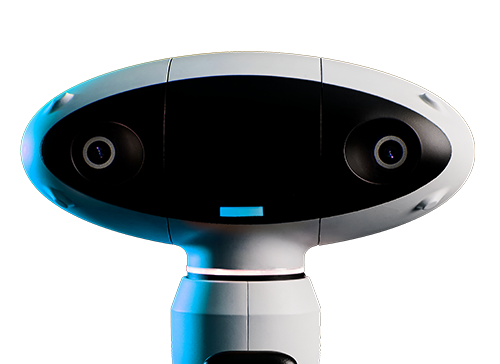
The New-Age MicronTracker represents a leap in surgical tracking technology. This transition, from MicronTracker 3 to 4, addressed several limitations, significantly enhancing its capabilities. The MicronTracker 4 brought key technological advancements, including improved accuracy, faster tracking, and better adaptability to various clinical settings. These enhancements have made the MicronTracker an indispensable tool in modern surgical procedures, allowing for greater precision and patient safety. This evolution epitomizes the rapid progress in medical imaging and navigation technology.
Breaking Down the Technology
Breaking down the technology in advanced surgical navigation reveals three key components:
- Stereoscopic Vision: This technology has been a game-changer in surgery. It allows for three-dimensional visualization of the surgical field, providing surgeons with depth perception and spatial awareness that is crucial for precise and safe procedures.
- Role of FPGA in Enhancing Image Processing Speed: Field-Programmable Gate Arrays (FPGAs) play a critical role in speeding up image processing. These integrated circuits can be programmed to perform specific image processing tasks efficiently, thus reducing latency and enabling real-time tracking in surgical procedures.
- Achieving High-Resolution and Real-Time Tracking: The combination of high-resolution imaging with rapid processing capabilities allows for real-time tracking of surgical instruments. This is essential for navigating complex surgical environments accurately and for making minute adjustments in real time, greatly enhancing surgical precision and patient safety.
A Leap in Dental Implant Precision
In the realm of dental implant surgery, JADAK has collaborated with innovative surgical OEMs. They’ve innovated by integrating sophisticated camera technology into dental procedures involving:
- Innovations in Dental Implant Surgery: They’ve employed advanced imaging and 3D modeling techniques, streamlining the implant process. This has reduced the number of patient visits and increased the precision of implant placements.
- Tailoring Camera Technology for Dental Applications: The company developed a specialized, lightweight camera that attaches to dental tools, like drills, enabling real-time, accurate mapping of the patient’s mouth during procedures. This bespoke technology has greatly enhanced the accuracy and efficiency of dental implant surgeries.

Impact on the the Surgical field
The impact of these technologies on the medical field is profound:
Enhancing Surgical Precision and Patient Safety
The integration of advanced surgical navigation and tracking technologies has significantly improved surgical precision. This enhancement has led to reduced operative times, minimized complications, and better patient outcomes. The technology is particularly beneficial in delicate or complex procedures, where precision is critical.
Expanding the Horizons: Beyond Traditional Surgery
The integration of advanced technologies in surgery has significantly broadened the scope beyond conventional methods. Notably, in dentistry, these advancements have made complex procedures like guided bone regeneration, intricate root canal surgeries, and precise placement of dental implants more manageable and safer. The precision afforded by these technologies is particularly beneficial for procedures requiring high accuracy, such as in cosmetic dental surgeries where the aesthetic outcome is crucial. This broadening of capabilities reflects the dynamic nature of medical treatments and patient care, continually pushing the boundaries of what is possible in surgery.
Practical Implementation: Successes and Challenges
In practical implementation, these technologies have shown notable successes in enhancing surgical precision and patient safety. However, they also face challenges, including integration with existing systems, user training, and ensuring reliability and accuracy in diverse surgical settings.
Future of Surgical Navigation and Imaging Technologies
Looking ahead, the future of surgical imaging technologies is marked by exciting potential developments and innovations:
Potential Developments and Upcoming Innovations
We’re on the cusp of seeing more advanced integration of imaging technologies with surgical practices. This includes enhanced 3D imaging for deeper insights into complex anatomies and the potential for augmented reality applications to provide real-time, overlayed information during surgeries.
The Role of AI and Machine Learning in Future Enhancements
AI and machine learning are poised to play a transformative role in surgical imaging. They could offer predictive analysis, improve diagnostic accuracy, and enable more personalized surgical planning. These technologies could also assist in real-time decision-making during surgeries, leading to even greater precision and safety.