
What is 1D and 2D Barcode Reading?
Barcodes are so familiar that many of us have forgotten or never knew of time when they did not exist. But they are everywhere. The idea of encoding data in lines and squares is so simple and elegant that its proliferation has had tremendous rippling impacts in the economy.
In this article, we will briefly journey from the origins of barcodes to follow the growth of the technology that underpins them, and take a look at its probable future.
The Birth of Barcodes
Commerce existed before barcodes, but it was a laborious time. Business relied on the efforts of fallible people, not precise and reliable machines. Paper-based systems filled with human data-entry proved hiding grounds for all kinds of errors. Inventory was invisible barring a massive stock counting effort. (Inventory management would begin to create visibility with the application of RFID technology, conveniently being developed at the same time as barcodes.) Transactions between customers and business crawled. And all the inefficiencies, high costs, and the chaotic business landscape ended up stifling growth and innovation.
Enter the dawn of barcodes (and machines?). A brilliant light in the dark ages of backwards business practices broke the horizon over a jungle of industry people who knew there had to be a better way. That hope was found in the barcode. The barcode itself is a basic encoding idea that drove the development of a class of industries around reading and using data tagging. To be sure, we’ve always been doing this, price tags and people are analogous to barcodes and barcode readers. Now with technology, we’ve managed to offload the work to the machines.
And here’s how:
The Invention of the First Barcode
In the late 1940s, the first barcode was invented by Norman Joseph Woodland and Bernard Silver, inspired by a supermarket executive’s request for a system to automatically read product information during checkout. As the story goes, Woodland, a mechanical engineering graduate, sat on a beach in Miami, drawing Morse code in the sand when he had the epiphany that this code, with its simple system of dots and dashes, could be extended into lines of varying thickness to encode information.
Together with Silver, a graduate student, they developed the first barcode. It was the “bullseye” barcode, or concentric circle barcode, designed to be scanned in any direction, similarly to 2D barcodes today. Their innovation laid the foundation for modern barcode technology, which they patented in 1952.
It was a brilliant invention that failed to become the application of barcode that what we see today, due to the many challenges of the time, like limited technology, costs and complexity, printers that could not reliably reproduce the bullseye barcode, lack of standardization around barcode encoding, and overall the lack of market readiness. It took two more decades before barcode technology became commercially viable.
In 1974, more than two decades later, the breakthrough came. The first Universal Product Code (UPC) was scanned at a supermarket in Ohio, marking the official debut of barcodes in retail—a milestone that revolutionized data management across industries, and transformed inventory tracking, sales processing, and supply chain logistics.
Early Adoption in Grocery Stores and Its Impact on Checkout Efficiency
In the 1970s, retail companies were doing more business than ever before. Economic growth, globalization, and retail expansion were on the rise fueled by consumerism. Furthermore a phase of deregulation energized a round of competition that helped fuel the development of the barcode industry. The first significant demonstration of this technology occurred in 1974 at that Marsh supermarket in Troy.
1D Barcodes – The Classic Hero
These early grocery store successes turned hope into reality for inventory and data management, and opened the door for a broader technological revolution in commerce and beyond. Characterized by coding data horizontally using a series of parallel lines and spaces, 1D barcodes quickly became indispensable across multiple sectors, showcasing their versatility and reliability in a variety of circumstances.
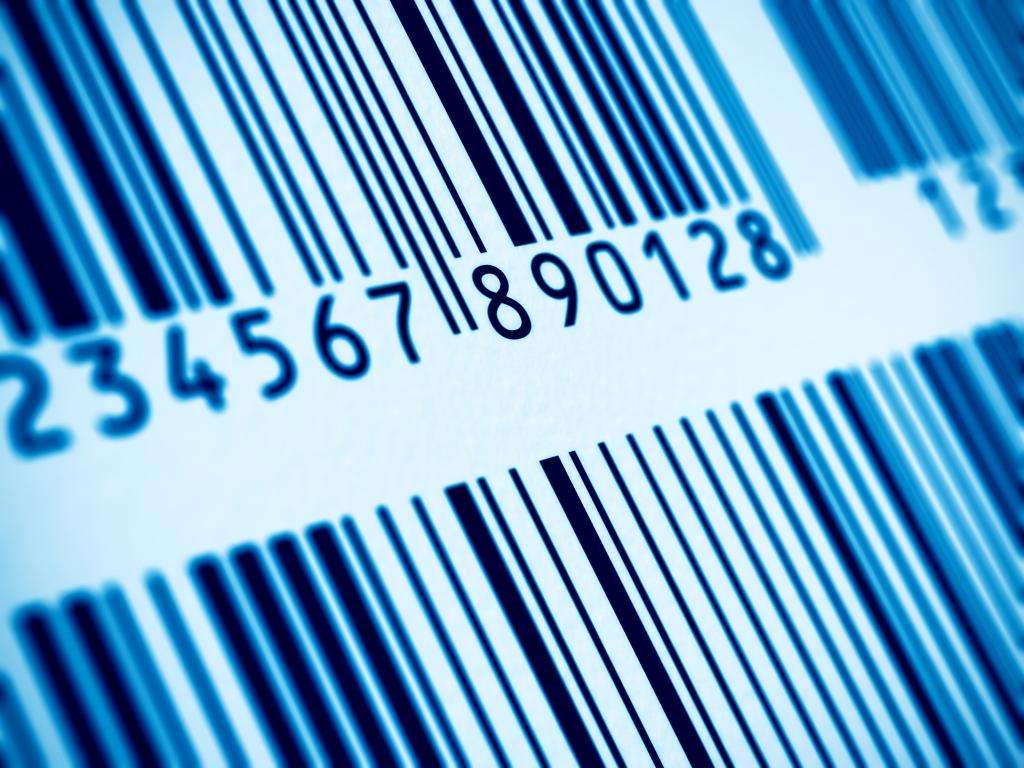
In retail, they streamline checkout processes and manage stock efficiently. In healthcare, they track medications and patient records, significantly reducing errors and improving safety. Logistics and transportation companies use them to track packages, ensuring accurate deliveries and efficient routes. In manufacturing, they manage parts on assembly lines, ensuring product quality and smooth operations.
1D barcodes come in various types, each tailored to specific needs and exceptionally versatile. The UPC (Universal Product Code) is the most recognized, simplifying product identification and speeding up checkouts in retail. The EAN (European Article Number) is similar but used internationally, facilitating global trade and consistency. Code 128, which can encode all 128 ASCII characters, is ideal for logistics and transportation, appearing on shipping labels and patient wristbands, highlighting its extensive utility and adaptability.
The Rise of 2D Barcodes
Parkinson’s Law of Data states that “Data expands to fill the space available for storage.”
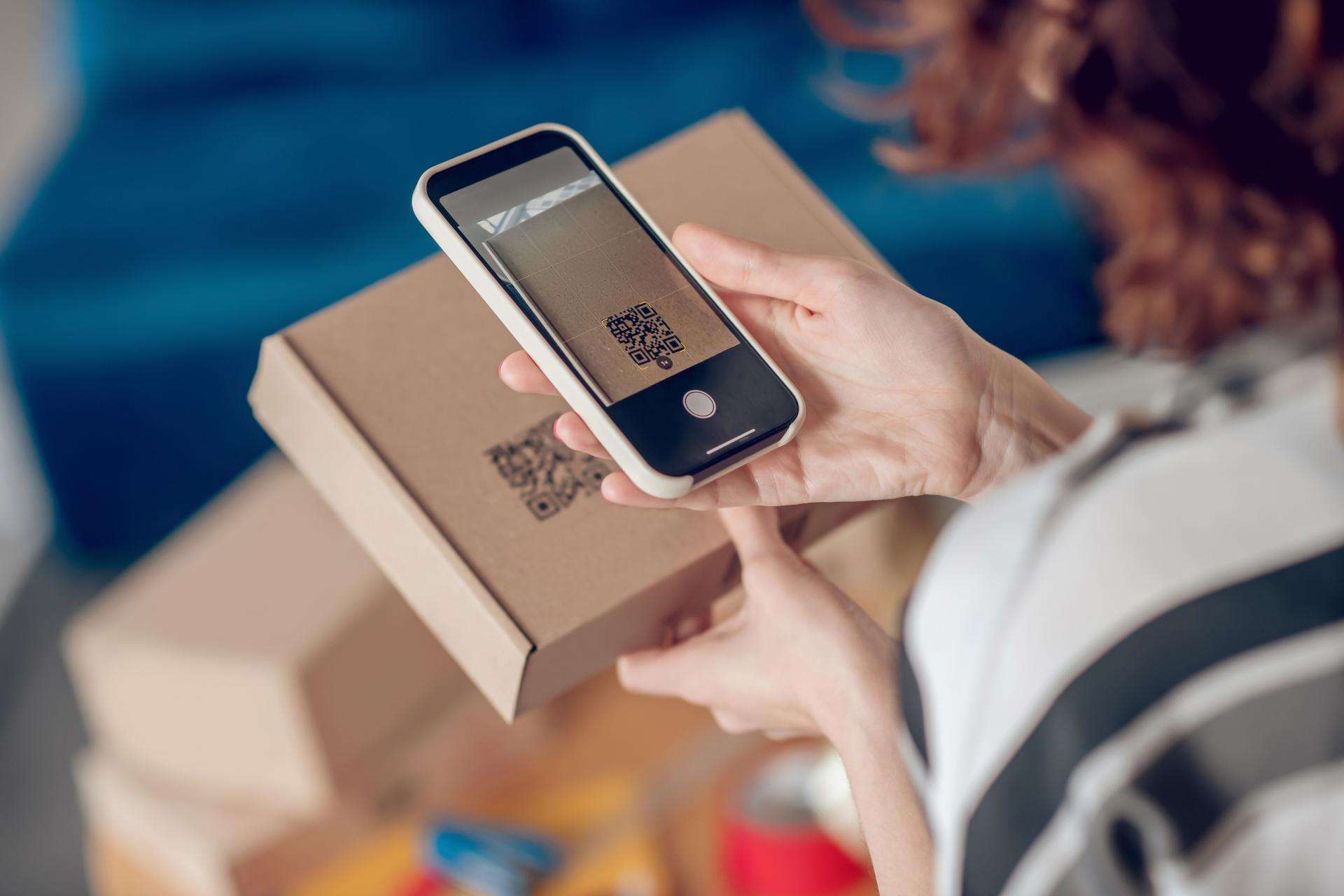
Truly the success of 1D barcodes highlighted its data capacity limitations and the need for more “storage”. Businesses and industries beyond retail, like healthcare and logistics which have much more data to be encoded, wanted to store more information in a compact and efficient manner. 2D barcodes emerged to meet these demands which significantly increase their data encoding by using both the horizontal and vertical dimensions.
Advancements in 2D Barcodes: QR, Data Matrix, and PDF417
Leading the pack of these versatile 2D barcodes are QR (Quick Response) codes, perhaps the most recognized 2D barcode, revolutionized marketing campaigns, product packaging, payment systems, and event ticketing by storing URLs, contact information, and more, becoming a cornerstone of mobile technology. Data Matrix codes, known for their compact size, are ideal for marking small items and are extensively used in manufacturing and healthcare for tracking tiny products and medical devices efficiently. PDF417 barcodes, renowned for their ability to store large amounts of data, are commonly found on identification cards, driver’s licenses, and shipping labels, encoding complex data sets and ensuring secure information transfer.
| 1D Barcodes | 2D Barcodes | |
| Character Storage | Typically store between 20 to 25 characters. | Can store up to several thousand characters. For example, a QR code can store up to 4,296 alphanumeric characters or 7,089 numeric characters, while a Data Matrix code can store up to 2,335 alphanumeric characters or 3,116 numeric characters. |
| Encoding | Data is encoded in a series of spaces and parallel lines. Data capacity is limited by the length and resolution of the barcode. | Data is encoded in both horizontal and vertical dimensions, allowing for a much higher data density. |
| Encoding Common Types | Commonly used 1D barcodes include UPC (Universal Product Code), EAN (European Article Number), and Code 39. | Commonly used 2D barcodes include QR codes, Data Matrix codes, and PDF417. |
To appreciate the full impact and promise of barcodes, let’s delve some into the intricate science and standardization that underpin this ubiquitous technology.
The Convergence of Standards and Technology
The Technology
Barcodes come to life through the technology of scanners. The first scanner dates back to 1974 developed by IBM, and used in the same first scan of a UPC barcode taking place on June 26, 1974, at a Marsh supermarket in Troy. Since then, we now employ three types of scanners, laser readers, CCDs, and camera-based scanners, in several different modes.
Laser scanners, used for 1D scanning, offer speed and accuracy, particularly in high-speed retail environments. Linear imagers excel in reading damaged or poorly printed barcodes. 2D imagers enhance versatility by reading both 1D and 2D barcodes, even from any orientation.
By the 1980s, the first 2D scanners for Data Matrix were being made, and by the 1990s practical scanners were in the market. Since then they have proved to be productive technologies, leading to the widespread use of QR codes. These barcodes have become ubiquitous, and so have the scanners. There are now handheld scanners that are versatile in stocking situations, presentation scanners that easily sit on desktops, fixed-mount scanners used on conveyor belts, and omnidirectional scanners that scan everything in every direction.
A true game-change, however, scanners have been integrated into smartphones and tablets revolutionizing accessibility. Popularized during the 2020 pandemic, QR codes were used to eliminate the dissemination of community objects like menus. Now printed and digital QR codes have been adopted as the go to method for discovering more information about a product, brand, event, etc. Simply scan with your phone. Which everyone can do now, only 50 years since the first barcode reader, and 30 years since the first QR code scanner.
The Standardization
At the heart of barcoding lies a simple yet powerful concept: encoding data into visual patterns that can be quickly and accurately read by scanners. Encoding is the process of translating data into patterns that represent specific information, importantly, the patterns are agreed upon in advance. The international standards bodies that maintain those agreements are: ISO (International Organization for Standardization) and IEC (International Electrotechnical Commission), which ensure consistency and reliability across barcode systems, making them universally recognizable and dependable.
These standards are important because they provide a basis for interoperability between systems and devices, in fact it’s the very impetus that drove the development of barcodes. However, as barcodes become more integrated into everyday life, they give rise to crucial issues in security and ethics, requiring measures to maintain consumer trust and data integrity. Currently, data protection is a main issue when it comes to encoding and barcodes employ encryption, watermarking and increasingly blockchain. As we will see, the future will bring other technologies to bear on this issue.
The environmental impact of barcodes is also becoming increasingly significant. There is a growing demand for sustainable practices to overcome the production and disposal of traditional barcodes. A demonstration that this complex interplay between technology, standardization, security, ethics, and sustainability shapes the dynamic and evolving landscape of barcode technology.
The Future of Barcoding
The future of barcoding may leap from the realms of science fiction into our everyday reality, driven by cutting-edge technologies such as Augmented Reality (AR), the Internet of Things (IoT), and Artificial Intelligence (AI). These advancements promise to transform barcode applications in ways that enhance data management, security, and user experiences like never before.
Imagine walking into a store and using your smartphone to scan a product’s barcode. Through Augmented Reality (AR), detailed product information, customer reviews, and promotional offers could instantly appear on your screen, creating an immersive shopping experience and providing valuable data. In warehouses, the Internet of Things (IoT) will integrate barcodes with smart devices, enabling automatic tracking of goods, real-time inventory monitoring, and automated reordering, significantly boosting efficiency and accuracy. Artificial Intelligence (AI) will further enhance barcode technology by analyzing data to predict consumer behavior, optimize inventory management, and prevent fraud, allowing businesses to address potential issues proactively and maintain smooth operations.
Many of these ideas are already here. The barcode is already ubiquitous, and the convergence of AR, IoT, and AI with barcode technology promises a future of unprecedented efficiency and innovation across the world.
Transforming Barcoding for a New Era with JADAK
Barcodes and barcode readers have transformed industries, enhancing efficiency and accuracy in ways we never imagined. Jadak’s barcode and machine vision cameras and engines are at the forefront of driving the future of barcoding.
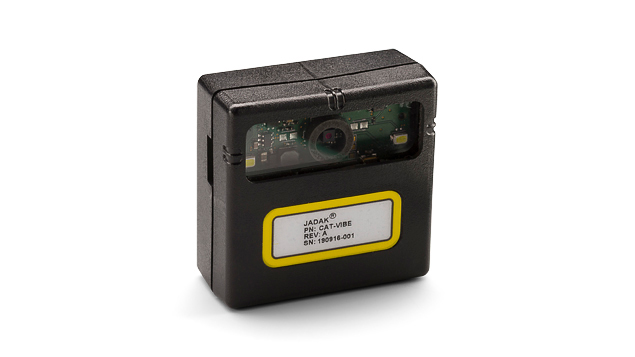
VIBE® Fixed Mount Machine Vision Camera
Compact vision systems in medical devices enable quick, accurate bedside tests, improving patient care. The Vibe camera’s small size and customizable design allow for efficient barcode scanning, enhancing treatment accuracy.
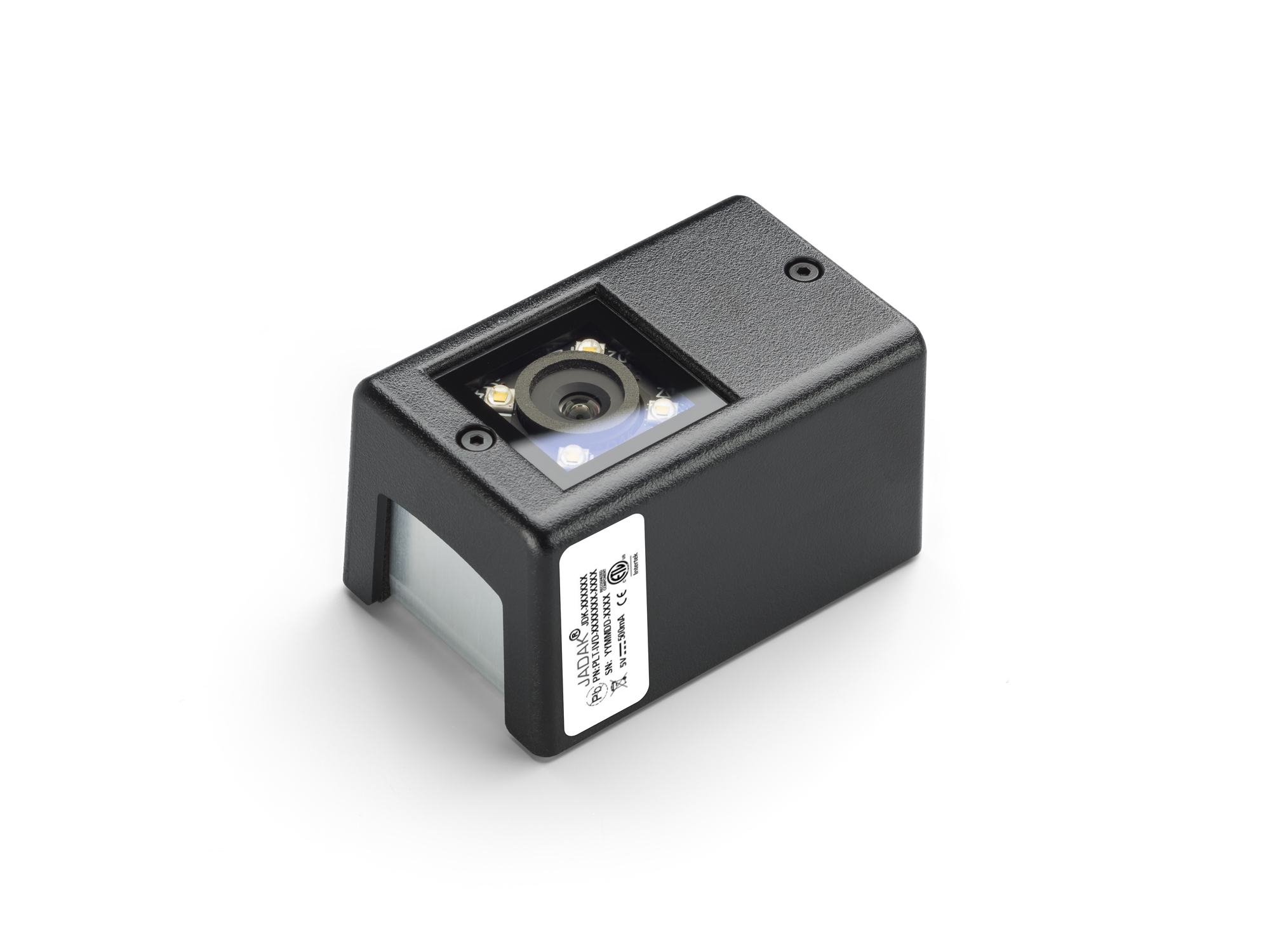
Allegro IVD Smart Camera Series
The IVD smart camera provides advanced processing that accurately decodes barcodes and measures liquid levels, ensuring precise sample volume verification and detailed layer analysis in samples.
Watch Video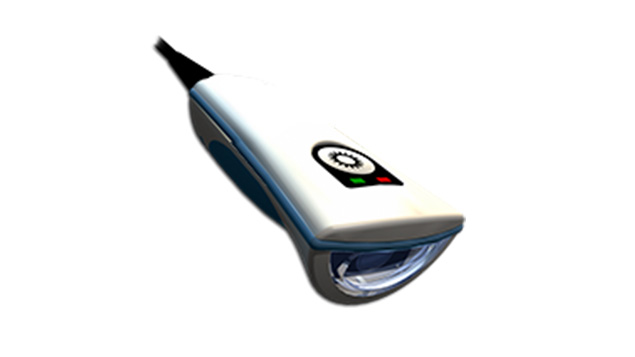
Flexpoint HS-1R Handheld Barcode and RFID Scanner Series
Designed specifically for healthcare professionals applications, ensuring secure and efficient operations. The HS-1R reads both barcodes and RFID, enabling healthcare professionals to easily verify patient identities and medication details, reducing risk of error and enhancing patient safety at point of care.
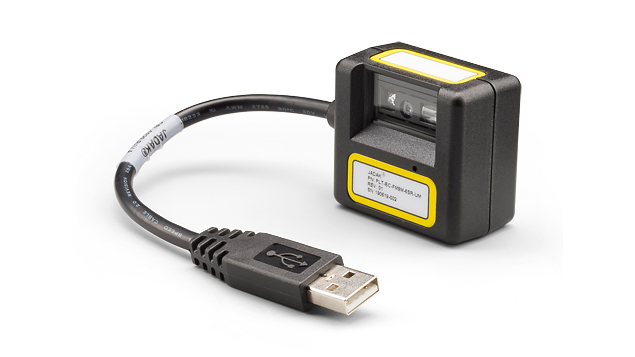
FM-8 and FM-9 Fixed Mount Barcode/Machine Vision Scanners
The FM-8 and FM-9 General Purpose Fixed Mounted Imagers are JADAK’s fully customizable image based 1D/2D barcode scanners with optional machine vision capabilities—capable of capturing and processing images with JADAK’s Clarity™ 3.0 Machine Vision Software.